7. Security
7.1. Introduction
Security vulnerabilities and attack vectors are everywhere. The telecom industry and its cloud infrastructures are especially vulnerable to potential attacks due to the ubiquitous nature of the infrastructures and services, combined with the vital role telecommunications play in the modern world. The attack vectors are many and varied, ranging from the potential for exposure of sensitive data, both personal and corporate, to weaponized disruption to the global telecommunications networks. These threats can take the form of physical attacks on the locations where the infrastructure hardware is housed, to network attacks, such as denial of service and targeted corruption of the network service applications themselves. Whatever the source, a Cloud Infrastructure needs to be able to withstand attacks in whatever form they take.
This chapter examines multiple aspects of security, as it relates to cloud infrastructure and security aspects for workloads. After discussing security attack vectors, this chapter delves into the security requirements. Regarding security requirements and best practices, specifications and documents are published by standards organisations. A selection of standards of interest for cloud infrastructure security is listed in a dedicated section. This chapter culminates with a consolidated set of requirements recommendations. It is suggested that operators carefully evaluate the recommendations for possible implementation.
7.2. Potential attack vectors
Previously, attacks designed to place and migrate workloads outside the legal boundaries were not possible using the traditional infrastructure, due to the closed nature of these systems. However, using cloud infrastructure, violation of regulatory policies and laws becomes possible by actors diverting or moving an application from an authenticated and legal location to a potentially illegal location. The consequences of violating regulatory policies may take the form of a complete banning of service and/or an exaction of a financial penalty by a governmental agency or through SLA enforcement. Such vectors of attack may be the original intention of the attacker in an effort to harm the service provider. One possible attack scenario is when an attacker exploits the insecure NF API to dump personal data records from the database, in an attempt to violate user privacy. Cloud infrastructure operators should ensure that the APIs are secure and accessible over a secure network (transport layer security or TLS), under strict set of security best practices and RBAC policies to limit exposure of this vulnerability.
Typical cloud-associated attacker tactics have been identified in the widely accepted MITRE ATT&CK® Framework. This framework provides a systematic approach to capture adversarial tactics targeting cloud environments. Examples of such adversarial tactics are listed in the following table.
Attacker tactics |
Examples |
|---|---|
Initial access |
Compromising user administration accounts that are not protected by multifactor authentication. |
Evasion |
Modifying cloud compute instances in the production environment by modifying virtual instances for the staging of attacks. |
Discovery |
Discovering which cloud services are operating and then disabling them at a later stage. |
Data exfiltration |
Moving data from the compromised tenant’s production databases to the hacker’s cloud service account, or transferring data out of the communication service provider (CSP) to the attacker’s private network. |
Service impact |
Creating denial-of-service availability issues by modifying the Web Application Firewall (WAF) rules and compromising APIs and web-based GUIs. |
Table 7-1: Examples of cloud attacker tactics
7.3. Security scope
7.3.1. In-scope and out-of-scope definition
The scope of the requirements of the security controls maps to the scope of the Reference Model architecture.
Cloud infrastructure requirements must cover the virtual infrastructure layer and the hardware infrastructure layer, including virtual resources, hardware resources, the virtual infrastructure manager, and the hardware infrastructure manager, as described in Chapter 3.
7.3.2. High-level security requirements
The following diagram shows the different security domains that impact the Reference Model:
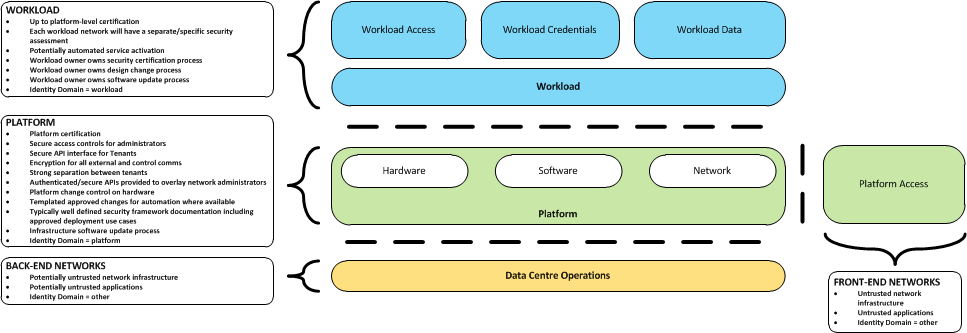
Figure 7.1 Reference Model Security Domains
..note:
"Platform" refers to the cloud infrastructure, with all its hardware and software components.
7.3.2.1. Platform security requirements
At a high level, the following areas/requirements cover platform security for a particular deployment:
Platform certification.
Secure access controls for administrators.
A secure API interface for tenants.
Encryption for all external and control communications.
Strong separation between tenants, ensuring network, data, memory, and runtime process (CPU running core) isolation between tenants.
Authenticated/secure APIs provided to overlay network administrators.
Platform change control on hardware.
Templated approved changes for automation where available.
Typically well-defined security framework documentation, including approved deployment use cases.
Infrastructure software update processes.
7.3.2.2. Workload security requirements
At a high level, the following areas/requirements cover workload security for a particular deployment:
Certification up to platform level.
Requirement of each workload network to undertake it own security self-assessment and accreditation, and not inherit a security accreditation from the platform.
Potentially automated service activation.
The workload owner owns the workload security certification process.
The workload owner owns the workload design change process.
The workload owner owns the workload software update process.
7.3.3. Common security standards
The Cloud Infrastructure Reference Model and the supporting architectures are not only required to optimally support networking functions. They must also be designed, from inception, with common security principles and standards. These best practices must be applied at all layers of the infrastructure stack and across all points of interconnection (internal or with outside networks), APIs, and contact points with the NFV network functions overlaying or interacting with that infrastructure.
A good place to start to understand the security requirements is to use the following widely accepted definitions and core principles developed by the Open Web Application Security Project (OWASP):
Confidentiality: only allow access to data which the user is permitted to view.
Integrity: ensure the data has not been tampered with or altered by unauthorised users.
Availability: ensure the systems and data are available to authorised users when they need it.
These three principles are complemented for cloud infrastructure security by authenticity. Authenticity refers to the ability to confirm that the users are valid and have the correct rights to access the systems or data.
Standards organisations with recommendations and best practices, and certifications that need to be taken into consideration, include the following examples. This is not an exhaustive list, it contains only some of the more important standards in current use.
Center for Internet Security - https://www.cisecurity.org/
Cloud Security Alliance - https://cloudsecurityalliance.org/
Open Web Application Security Project - https://owasp.org/
The National Institute of Standards and Technology (NIST), with the following special publications:
NIST SP 800-123 Guide to General Server Security
NIST SP 800-204A Building Secure Microservices-based Applications Using Service-Mesh Architecture
NIST SP 800-204B Attribute-based Access Control for Microservices-based Applications Using a Service Mesh
NIST SP 800-207 Zero Trust Architecture
NIST SP 800-218 Secure Software Development Framework (SSDF)
FedRAMP Certification https://www.fedramp.gov/
ETSI Cyber Security Technical Committee (TC CYBER) - https://www.etsi.org/committee/cyber
ETSI Industry Specification Group Network Functions Virtualisation (ISG NFV) and its Security Working Group NFV-SEC
The International Organization for Standardization (ISO) and the International Electrotechnical Commission (IEC) - www.iso.org. The following ISO standards are of particular interest for NFVI:
ISO/IEC 27002:2013 and ISO/IEC 27001: these are the international standards for best-practice information security management systems (ISMSs).
ISO/IEC 27032: this is the international standard focusing explicitly on cybersecurity.
ISO/IEC 27035: this is the international standard for incident management.
ISO/IEC 27031: this is the international standard for ICT readiness for business continuity.
In the mobile network field, the GSM Association (GSMA) and its Fraud and Security working group of experts have developed a set of documents specifying how to secure the global mobile ecosystem.
The document “Baseline Security controls”, FS.31 v2.0 [31], published in February 2020, is a practical guide intended for operators and stakeholders to check mobile network’s internal security. It lists a set of security controls from business controls (including security roles, organizational policies, business continuity management, and so on) to technological controls (for user equipment, networks, operations, and so on), covering all areas of mobile network, including Cloud Infrastructure. A checklist of questions allows the operator to improve the security of a deployed network.
The document “Network Equipment Security Assurance Scheme – Development and Lifecycle Security Requirements” [32], is part of a set of documents that aim to build a security assurance scheme for network equipment. Focusing on critical controls, it defines a set of requirements to be met by the vendors’ development and product lifecycle processes.
The GSMA security activities are currently focused on 5G services and the new challenges posed by the virtualisation of network functions and by open-source software. The following two documents are in the scope of cloud infrastructure security:
The white paper “Open Networking & the Security of Open Source Software deployment” [33], deals with open-source software security. It highlights the importance of layered security defences and lists recommendations and security concepts that are able to secure deployments.
The “5G Security Guide” [34] (non-binding Permanent Reference Document), covers 5G security in a holistic way, from user equipment to networks. This document describes the new security features in 5G. It includes a dedicated section on the impact of the cloud on 5G security, with recommendations on virtualisation, cloud-native applications, and containerisation security.
7.4. Cloud infrastructure security
7.4.1. General platform security
The security certification of the platform typically needs to be the same as, or higher than, the workload requirements.
The platform supports the workload, and in effect controls access to the workload to and from the external endpoints, such as carriage networks used by workloads, by data centre operations staff supporting the workload, or by tenants accessing workloads. From an access security perspective, the following diagram shows where the different access controls operate within the platform to provide access controls throughout the platform.
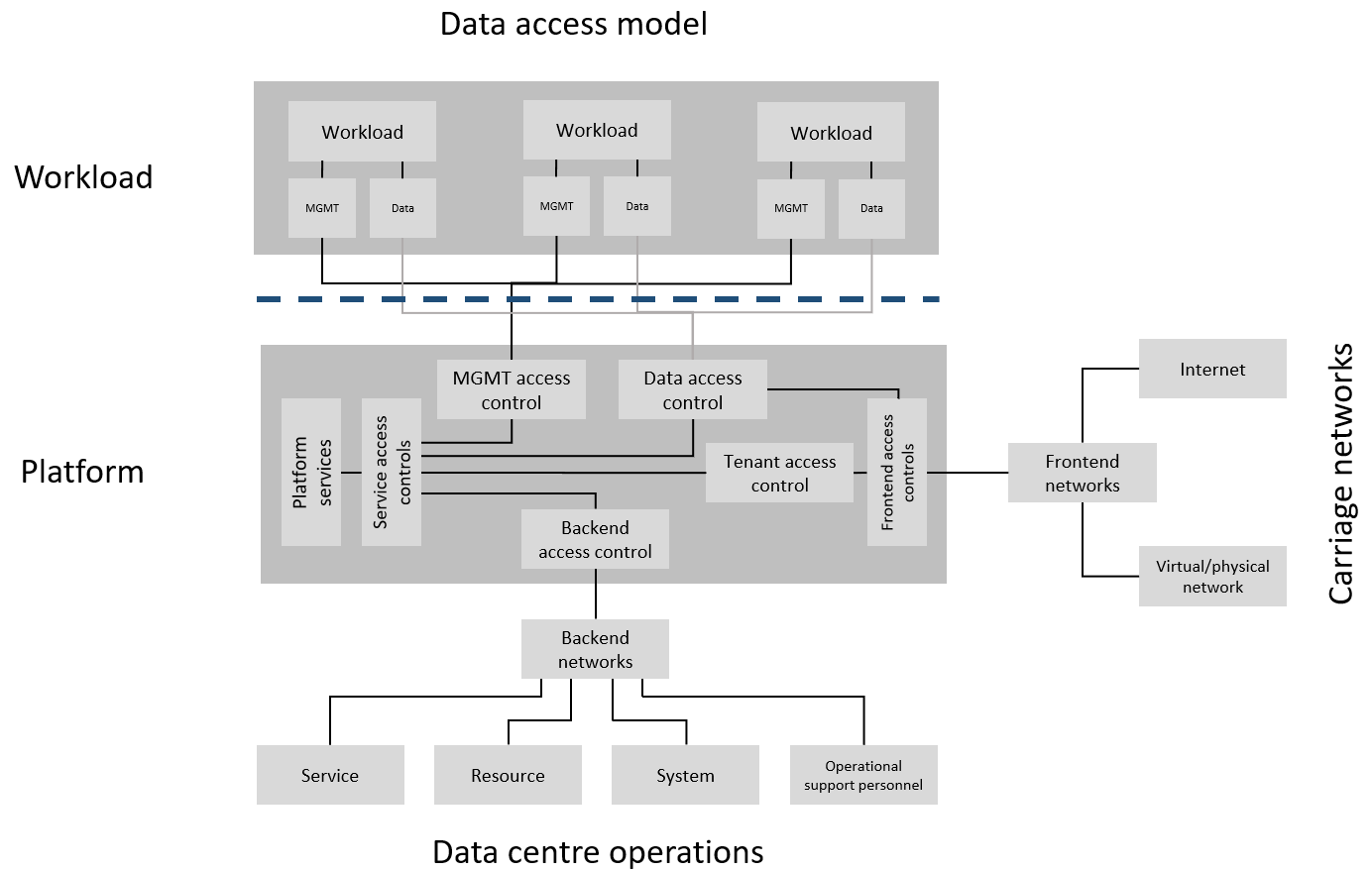
Figure 7.2 Reference Model access controls
7.4.1.1. High-level functions of access controls
MGMT ACCESS CONTROLS - These provide platform access to workloads for service management. Typically, all management and control-plane traffic is encrypted.
DATA ACCESS CONTROLS - These control the east-west traffic between workloads and control of north-south traffic between the network function (NF) and other platform services, such as front-end carriage networks and platform services. Inherently strong separation between tenants is mandatory.
SERVICES ACCESS CONTROLS - These protect the platform services from any platform access.
BACK-END ACCESS CONTROLS - These provide data centre operations access to the platform, and subsequently, the workloads. Typically, stronger authent,ication, such as Two-Factor Authentication (2FA), is required, as well as the use of technologies, such as Role-Based Access Control (RBAC) and encryption. Application Programming Interface (API) gateways may be required for automated/script-driven processes.
FRONT-END ACCESS CONTROLS - These protect the platform from malicious carriage network access and provide connectivity for specific workloads to specific carriage networks. Carriage networks are those networks that are provided as public networks and are operated by carriers, in this case with interfaces that are usually subnetworks or virtual networks.
TENANT ACCESS CONTROLS - These provide appropriate tenant access controls to specific platform services and tenant workloads. These controls include Role-Based Access Control (RBAC), authentication controls as appropriate for the access arrangement, and Application Programming Interface (API) gateways for automated/script-driven processes.
7.4.1.2. General security requirements for the cloud infrastructure
System hardening
Adhering to the principle of least privilege, there is no login to the root on any platform systems when root privileges are not required.
..note:
Platform systems are those systems that are associated with the platform. They include systems that directly
or indirectly affect the viability of the platform.
Ensure that all the platform’s components, including hypervisors, VMs, and so on, are kept up to date with the latest patch.
To tightly control access to resources and protect them from malicious access and introspection, Linux Security Modules, such as SELinux, should be used to enforce access rules.
Vulnerability management
Security defects must be reported.
The Cloud Infrastructure components must be continuously analysed from deployment to runtime. The cloud infrastructure must offer tools to check the code libraries and all other code against the Common Vulnerabilities and Exposures (CVE) databases to identify the presence of any known vulnerabilities. The CVE is a list of publicly disclosed vulnerabilities and exposures that is maintained by MITRE. Each vulnerability is characterised by an identifier, a description, a date, and comments.
When a vulnerability is discovered on a component (from operating systems to virtualisation layer components), the remediation action depends on its severity. The Common Vulnerability Scoring System (CVSS) allows you to calculate a vulnerability score. It is an open framework widely used in vulnerability management tools. The CVSS is owned and managed by the Forum of Incident Response and Security Teams (FIRST). The CVSS consists of three metric groups: base, temporal, and environmental. The base metrics produce a score ranging from 0 to 10. This score can then be refined using temporal and environmental metrics. The numerical score can be translated into a qualitative representation of the severity: low, medium, high, or critical. The severity score (or the associated qualitative representation) allows organisations to prioritise the remediation activities, with high scores mandating a fast response time. The vulnerable components must then be patched or replaced, or their access must be restricted.
Security patches must be obtained from an authorised source, to ensure their integrity. Patches must be tested and validated in a preproduction environment before being deployed into production.
Platform access
Restrict traffic only to traffic that is necessary, and deny all other traffic, including traffic to and from the backend.
Provide protections between the internet and the workloads, including web and volumetrics attack preventions.
All host-to-host communications within the cloud provider network are to be cryptographically protected in transit.
Use cryptographically protected protocols for administrative access to the platform.
Data centre operations staff and systems must use management protocols that limit security risk, such as SNMPv3, SSH v2, ICMP, NTP, syslog, and TLS v1.2 or higher.
Processes for managing platform access control filters must be documented, followed, and monitored.
Role-Based Access Control (RBAC) must apply to all access to platform systems.
All access to APIs, including backend APIs, must use the TLS protocol.
Security hardware assist for data in use
Server hardware architectures offer various technologies to assist with protecting data in use. The following table categorizes such technologies.
HW technology |
Which security threat it mitigates |
Where it must be enabled |
How to operationally activate |
How to assure benign workloads are run |
|---|---|---|---|---|
Memory encryption on the level of the whole physical server. |
Protects data going between the CPU and the memory DIMMs. |
Server HW and BIOS. |
Configure BIOS. On virtualised software infrastructure label nodes to influence scheduling. |
Performed by application scheduling using node labels. |
Memory encryption on the level of the VMs. |
HW-protected data between the VMs. |
Server HW, BIOS, and hypervisor and guests (paravirtualised generally only in the guest BIOS). Attestation if assurance of workload is required. |
Configure BIOS and hypervisor. On virtualised software infrastructure label nodes to influence scheduling. |
Remote attestation of the freshly spun up VM, to provide measurements of the VM and of the platform patch level. |
Secure enclaves within application. |
HW-protected specific application code and data in memory, from processes running at higher privilege levels, such as OS or hypervisor. |
Server HW and BIOS, hypervisor if used, device plugin if Kubernetes is used, and in application. Attestation if assurance of workload required. |
Configure the BIOS and the hypervisor, if used. If Kubernetes is used, then the pod descriptor requests for such resources. |
Remote attestation of freshly spun up enclave, to provide measurements of the enclave and of the platform patch level. |
Using computing accelerators, such as FPGA or GPU, that are connected via an I/O link, such as PCI Express, breaks the confidentiality property, unless HW-assisted encryption of the I/O transfers, runtime encryption of the accelerated workload, and attestation of the accelerated workload can be guaranteed.
Workload security
Restrict traffic to and from the workload only to traffic that is necessary, and deny all other traffic.
Support zoning within a tenant workload using application-level filtering.
Do not expose tenant-internal IP address details to another tenant.
All production workloads must be separated from all non-production workloads, including separation between non-hosted non-production external networks.
Confidentiality and integrity
All data persisted to primary, replica, or backup storage is to be encrypted.
Monitoring and security audit
All platform security logs are to be time-synchronised.
Logs are to be regularly scanned for events of interest.
The cloud services must be regularly tested for vulnerability and penetration.
Platform provisioning and LCM
A platform change management process that is documented, properly communicated to staff and tenants, and rigorously followed.
A process to check change management adherence that is implemented and rigorously followed.
An approved system or process for last-resort access must exist for the platform.
Where there are multiple hosting facilities used in the provisioning of a service, network communications between the facilities for the purpose of backup, management, and workload communications are cryptographically protected in transit between data centre facilities.
Continuous cloud security compliance is mandatory.
An incident response plan must exist for the platform.
7.4.2. Platform backend access security
Validate and verify the integrity of the resources management requests coming from a higher orchestration layer to the cloud infrastructure manager.
7.4.3. Platform frontend access security
Frontend network security at the application level is the responsibility of the workload. However, the platform must ensure the isolation and integrity of tenant connectivity to frontend networks.
The frontend network may provide Distributed Denial Of Service (DDoS) support.
7.4.4. Infrastructure as a Code security
Infrastructure as a Code (IaaC), alternatively known as Infrastructure as Code (IaC), refers to the software used for the declarative management of the cloud infrastructure resources. To dynamically address user requirements, release features incrementally, and deliver more speedily, DevSecOps teams use best practices, including continuous integration and delivery, and integrate information security controls and scanning tools into these processes, with with the aim of providing timely and meaningful feedback. This includes identifying vulnerabilities and security policy violations. With these automated security testing and analysis capabilities, it is of critical value in detecting vulnerabilities early and maintaining a consistent security policy.
Because of the high complexity of modern Telco cloud infrastructures, even minor IaaC code changes could disproportionately and sometimes disastrously affect downstream security and privacy. Therefore, the integration of security testing into the IaaC software development pipeline requires security activities to be automated using security tools, and integrated with the native DevOps and DevSecOps tools and procedures.
The DevSecOps Automation best practices advocate, among other things, the implementation of a framework for security automation and programmatic execution, as well as the monitoring of security controls to identify, protect, detect, respond, and recover from cyber threats. The framework used for IaaC security is based on the joint publication of the Cloud Security Alliance (CSA) and SAFECode, “The Six Pillars of DevSecOps: Automation (2020)” [35]. This document uses the base definitions and constructs from ISO 27000 [36], and the CSA’s Information Security Management through Reflexive Security [37].
The framework identifies the following five distinct stages:
Secure design and architecture.
Secure coding (developer IDE and code repository).
Continuous build, integration, and testing.
Continuous delivery and deployment.
Continuous monitoring and runtime defence.
Triggers and checkpoints define transitions within stages. When designing DevSecOps security processes, it should be borne in mind that when a trigger condition is met, one or more security activities is activated. The outcomes of these security activities need to determine whether or not the requirements of the process checkpoint are satisfied. If the outcome of the security activities meets the requirements, the next set of security activities is performed as the process transition to the next checkpoint, or, alternatively, to the next stage, if the checkpoint is the last one in the current stage. If, however, the outcome of the security activities does not meet the requirements, then the process should not be allowed to advance to the next checkpoint. In “Consolidated security requirements”, the IaaC security activities are presented as security requirements mapped to particular stages and trigger points.
7.4.5. Security of production and non-production environments
Telecommunications operators often focus their security efforts on the production environments actively used by their customers or their employees, or both. This is critical because a breach of these systems can seriously damage the company and its customers. In addition, production systems often contain the most valuable data, making them attractive targets for intruders. However, an insecure non-production (development and testing) environment can also create real problems because they may leave a company open to corporate espionage, sabotage by competitors, and theft of sensitive data.
Security is about mitigating risk. If operators do not have the same level of security in their non-production environments compared to production, then an additional level of risk may be introduced. This is especially true if such non-production environments accept outside connections (for example, for suppliers or partners, which is quite normal in complex Telco ecosystems). There is a need to monitor the security of these non-production environments. The gold standard, therefore, is to implement the same security policies in production and non-production infrastructure. This would reduce risk and typically simplify operations by using the same control tools and processes. However, for practical reasons, some of the security monitoring rules may differ. As an example, if a company maintains a separate, isolated environment for infrastructure software development experimentation, the configuration monitoring rules may be relaxed, in comparison with the production environment, where such experimentation is not allowed. Therefore, in this document, when dealing with such dilemmas, the focus has been placed on those non-production security requirements that must be on the same level as in the production environment (typically of must type), leaving relaxed requirements (typically of should or may) in cases where there is no such necessity.
In the context of contemporary telecommunications technology, the cloud infrastructure typically is considered Infrastructure as a Code (IaaC). This fact implies that many aspects of code-related security automatically apply to IaaC. Security aspects of IaaC in the Telco context are discussed in “Infrastructure as a Code security”, which introduces the relevant framework for security automation and programmatic execution, as well as monitoring of security controls. Organisations need to identify which of the stages, or activities within these stages, should be performed within the non-production versus production environments. This mapping will then dictate which security activities defined for particular stages and triggers (such as vulnerability tests, patch testing, and penetration tests) are mandatory, and which can be regarded as discretionary.
7.5. Workload security and vendor responsibility
7.5.1. Software hardening
There must be no hard-coded credentials or clear text passwords in the code and images. The software must support configurable or industry-standard password complexity rules.
The software should be independent of the infrastructure platform (no OS point release dependencies to patch).
The software must be code-signed. All individual subcomponents are assessed and verified for End-user License Agreement (EULA) violations.
The software should have a process for discovery, classification, communication, and timely resolution of security vulnerabilities (that is, bumg bounty, penetration testing/scan findings, and so on).
The software should support recognised encryption standards. Encryption should be decoupled from the software.
The software should have support for configurable banners to display authorised use criteria/policies.
7.5.2. Port protection
Unused software and unused network ports should be disabled by default.
7.5.3. Software code quality and security
Vendors should use industry-recognized software testing suites.
Static and dynamic scanning.
Automated static code review with remediation of medium/high/critical security issues. The tool used for static code analysis, and analysis of the code being released, must be shared.
Dynamic security tests with remediation of medium/high/critical security issues. The tool used for dynamic security analysis of code being released must be shared.
Penetration tests (pen tests) with remediation of medium/high/critical security issues.
The methodology for ensuring that security is included in the Agile/DevOps delivery lifecycle for ongoing feature enhancement/maintenance.
7.5.4. Alerting and monitoring
Security event logging: all security events must be logged, including informational events.
Privilege escalation must be detected.
7.5.5. Logging
Logging output should support customizable log retention and log rotation.
7.6. Workload security: cloud infrastructure operator responsibility
The operator’s responsibility is not only to make sure that security is included in all the vendor-supplied infrastructure and NFV components, but also to maintain the security functions from an operational and management perspective. This includes, but is not limited to, securing the following elements:
Maintaining standard security operational management methods and processes.
Monitoring and reporting functions.
Processes to address regulatory compliance failures.
Support for appropriate incident response and reporting.
Methods to support appropriate remote attestation certification of the validity of the security components, architectures, and methodologies used. This can include the automated TLS certificate lifecycle management for workloads:
Accept signing requests for certificates,
Generate and manage private keys and Certificate Signing Requests (CSRs),
Manage renewal before expiry.
7.6.1. Remote attestation/OpenCIT
Cloud infrastructure operators must ensure that remote attestation methods are used to remotely verify the trust status of a given cloud infrastructure platform. The concept is based on boot integrity measurements leveraging the Trusted Platform Module (TPM) built into the underlying hardware. Remote attestation can be provided as a service. It may be used by the platform owner or by a customer to verify that the platform has booted in a trusted manner. Practical implementations of the remote attestation service include the Open Cloud Integrity Tool (OpenCIT). OpenCIT provides ‘Trust’ visibility of the cloud infrastructure. It enables compliance in cloud datacenters by establishing the root of trust, and builds a chain of trust across hardware, operating system, hypervisor, virtual machines, and containers. It includes asset tagging for location and boundary control. The platform trust and asset tag attestation information is used by orchestrators and/or policy compliance management to ensure workloads are launched on trusted and location- or boundary-compliant platforms. They provide the necessary visibility and auditability of infrastructure in both public and private cloud environments.
7.6.2. Workload image
Only workload images from trusted sources may be used. Secrets must be stored outside the images.
It is easy to tamper with workload images. It requires only a few seconds to insert some malware into a workload image file while it is being uploaded to an image database or transferred from an image database to a compute node. To guard against this danger, workload images must be cryptographically signed and verified during launch time. This can be achieved by setting up a signing authority and modifying the hypervisor configuration to verify an image’s signature before it is launched.
To implement image security, the workload operator must test the image and the supplementary components, to verify that everything conforms to the security policies and best practices. The use of image scanners, such as OpenSCAP or Trivy, to determine security vulnerabilities is recommended.
CIS hardened images should be used whenever possible. CIS provides, for example, virtual machine hardened images based on CIS benchmarks for various operating systems. Another best practice is to use minimalist base images whenever possible.
Images are stored in registries. The images registry must contain vetted images only. The registry must remain a source of trust for images over time. Images must therefore be continuously scanned to identify vulnerabilities and out-of-date versions, as described previously. Access to the registry is an important security risk. It must be granted by a dedicated authorisation process and through secure networks that enforce authentication, integrity, and confidentiality.
7.6.3. Networking security zoning
Network segmentation is important for ensuring that applications can only communicate with those applications with which they are supposed to communicate. To prevent a workload from impacting other workloads or hosts, it is good practice to separate workload traffic and management traffic. This prevents attacks by VMs or containers breaking into the management infrastructure. It is also best to separate the VLAN traffic into appropriate groups and disable all other VLANs that are not in use. Likewise, workloads of similar functionalities can be grouped into specific zones and their traffic isolated. Each zone can be protected using access control policies and a dedicated firewall based on the required security level.
It is recommended to set network security policies following the principle of least privileged, only allowing approved protocol flows. For example, set ‘default deny’ for inbound flows and add the approved policies required for the functioning of the application running on the NFV infrastructure.
7.6.4. Volume encryption
Virtual volume disks associated with workloads may contain sensitive data. Therefore, they need to be protected. It is best practice is to secure the workload volumes by encrypting them and storing the cryptographic keys in safe locations. Encryption functions rely on a cloud infrastructure internal key management service. Be aware that the decision to encrypt the volumes might cause reduced performance. Therefore, the decision to encrypt needs to be dependent on the requirements of the given infrastructure. The Trusted Platform Module (TPM) module can also be used to store these keys securely. The hypervisor should also be configured to securely erase the virtual volume disks, in the event of application crashes, or in case it is intentionally destroyed to protect it from unauthorized access.
For sensitive data encryption, when data sovereignty is required, an external Hardware Security Module (HSM) should be integrated, in order to protect the cryptographic keys. A HSM is a physical device which manages and stores secrets. Usage of an HSM strengthens the security of the secrets. For 5G services, GSMA FASG recommends the implementation of an HSM to secure the storage of the Universal Integrated Circuit Card (UICC) credentials.
7.6.5. Root of trust for measurements
The following sections define the mechanisms to ensure the integrity of the infrastructure pre-boot and post-boot (running). The following definitions detail a set of terms used in those sections.
The hardware root of trust helps with the pre-boot and post-boot security issues.
The Unified Extensible Firmware Interface (UEFI) adheres to standards defined by an industry consortium. Vendors (hardware and software) and solution providers collaborate to define common interfaces, protocols, and structures for computing platforms.
The Platform Configuration Register (PCR) is a memory location in the TPM that is used to store TPM Measurements (hash values generated by the SHA-1 standard hashing algorithm). The PCRs are cleared only on TPM reset. UEFI defines 24 PCRs, of which the first 16, PCR 0 - PCR 15, are used to store measures created during the UEFI boot process.
The Root of Trust for Measurement (RTM) is a computing engine that is capable of making integrity measurements.
The Core Root of Trust for Measurements (CRTM) is a set of instructions executed when performing an RTM.
Platform Attestation provides proof of validity of the platform’s integrity measurements. For details, see “Remote attestation/OpenCIT”.
Values stored in a PCR cannot be reset (or forged), as they can only be extended. Whenever a measurement is sent to a TPM, the hash of the concatenation of the current value of the PCR and the new measurement is stored in the PCR. The PCR values are used to encrypt data. If the proper environment is not loaded, which will result in different PCR values, the TPM will be unable to decrypt the data.
7.6.5.1. Static Root of Trust for Measurement
The Static Root of Trust for Measurement (SRTM) begins with measuring and verifying the integrity of the BIOS firmware. It then measures additional firmware modules, verifies their integrity, and adds each component’s measure to an SRTM value. The final value represents the expected state of the boot path loads. The SRTM stores the results as one or more values stored in PCR storage. In the SRTM, the CRTM resets PCRs 0 to 15 only at boot.
Using a Trusted Platform Module (TPM) as a hardware root of trust, measurements of platform components, such as firmware, bootloader, and OS kernel, can be securely stored and verified. Cloud infrastructure operators should ensure that the TPM support is enabled in the platform firmware, so that the platform measurements are correctly recorded during boot time.
A simple process works in the following way:
The BIOS CRTM (Bios Boot Block) is executed by the CPU and is used to measure the BIOS firmware.
The SHA1 hash of the result of the measurement is sent to the TPM.
The TPM stores this new result hash by extending the currently stored value.
The hash comparisons can validate settings, as well as the integrity of the modules.
Cloud infrastructure operators should ensure that OS kernel measurements can be recorded by using a TPM-aware bootloader (for example, tboot, (see https://sourceforge.net/projects/tboot/) or shim, (see https://github.com/rhboot/shim)), which can extend the root of trust up to the kernel level.
The validation of the platform measurements can be performed by the TPM’s launch control policy (LCP) or through the remote attestation server.
7.6.5.2. Dynamic Root of Trust for Measurement
In the Dynamic Root of Trust for Measurement (DRTM), the RTM for the running environment is stored in the PCRs starting with PCR 17.
If a remote attestation server is used to monitor platform integrity, the operators should ensure that the attestation is performed periodically or in a timely manner. Additionally, platform monitoring can be extended to monitor the integrity of the static file system at run-time by using a TPM-aware kernel module, such as Linux Integrity Measurement Architecture (IMA). For details, see https://sourceforge.net/p/linux-ima/wiki/Home. Alternatively, you can use the trust policies functionality of OpenCIT. See https://github.com/opencit/opencit/wiki/Open-CIT-3.2-Product-Guide for details.
The static file system includes a set of important files and folders which do not change between reboots during the platform’s lifecycle. This allows the attestation server to detect any tampering with the static file system during the platform’s runtime.
7.6.6. Zero Trust Architecture
The sections “Remote attestation/OpenCIT” and “Root of trust for measurements” provide methods to ensure the integrity of the infrastructure. The Zero Trust concept goes a step further, by enabling the operator to build secure by design cloud infrastructure, from hardware to applications. The adoption of Zero Trust principles mitigates the threats and attacks within an enterprise, a network, or an infrastructure, thereby ensuring a fine grained segmentation between each component of the system.
Zero Trust Architecture (ZTA), as described in NIST SP 800-207 publication [38], assumes there is no implicit trust granted to assets or user accounts, whatever their location or ownership. The Zero Trust approach focuses on protecting all types of resources: data, services, devices, infrastructure components, and virtual and cloud components. Trust is never granted implicitly, and must be evaluated continuously.
The ZTA principles applied to the cloud infrastructure components are as follows:
The adoption of least privilege configurations.
The requirement of authentication and authorization for each entity, service, or session.
Fine-grained segmentation.
Separation of the control plane and the data plane.
Secure internal and external communications.
The continuous monitoring, testing, and analysing of security.
Zero Trust principles should also be applied to cloud-native applications. With the increasing use of these applications, which are designed with microservices and deployed using containers as packaging and Kubernetes as an orchestrator, the security of east-west communications between components must be carefully addressed. The use of secured communication protocols brings a first level of security. However, considering each component as non-trustworthy will minimize the risk for applications to be compromised. A good practice is to implement the proxy-based service mesh. This will provide a framework to build a secured environment for microservices-based applications, offering services such as service discovery, authentication and authorisation policies enforcement, network resilience, and security monitoring capabilities. The two documents, NIST SP 800-204A(Building Secure Microservices-based Applications Using Service-Mesh Architecture) and NIST SP 800-204B(Attribute-based Access Control for Microservices-based Applications Using a Service Mesh), describe service mesh, and provide guidance for the deployment of service mesh components.
7.7. Software supply chain security
Software supply chain attacks are increasing worldwide and can cause serious damage. Many enterprises and organisations are experiencing these threats. Aqua Security’s experts estimated that software supply chain attacks have more than tripled in 2021. Reuters reported in August 2021 that the ransomware affecting Kaseya Virtual System Administration product caused downtime for over 1500 companies. In the case of the backdoor inserted in codecov software, hundreds of customers were affected. The SolarWinds attack detailed in Defending against SolarWinds attacks is another example of how software suppliers are targeted and, by rebound, their customers affected. Open-source code weaknesses can also be exploited by attackers. The Log4J vulnerability, impacting many applications, is a recent example in this field. When addressing cyber security, the vulnerabilities of the software supply chain are often not taken into account. Some governments are already alerting and requesting actions to face these risks. The British government is hardening the law and standards of cyber security for the supply chain. The US government requested actions to enhance software supply chain security. The security of the software supply chain is a challenge also pointed out by the European Network and Information Security Agency, ENISA, in its report NFV Security in 5G - Challenges and Best Practices.
7.7.1. Software security
Software supply chain security is crucial and is made complex by the greater attack surface provided by the many different supply chains in virtualised, containerised, and edge environments. All software components must be trusted, from commercial software and open-source code to proprietary software, as well as the integration of these components. The SAFECode white paper “Managing Security Risks Inherent in the Use of Third-party Components” provides a detailed risk management approach.
To secure the software code, the following methods must be applied:
Use best practices coding, such as design pattern, recommended in the Twelve-Factor App or OWASP “Secure Coding Practices - Quick Reference Guide”.
Perform threat modelling, as described in the “Tactical Threat Modeling” document, published by SAFECode.
Use trusted, authenticated, and identified software images that are provided by authenticated software distribution portals.
Require suppliers to provide a Software Bill of Materials to identify all the components parts of their product’s software releases with their dependencies, and eventually identify the open-source modules.
Test the software in a pre-production environment to validate integration.
Detect vulnerabilities using security tools scanning and Common Vulnerabilities and Exposures (CVE), and apply remediation actions according to their severity ratings.
Report and remove vulnerabilities by upgrading components using authenticated software update distribution portals.
Actively monitor the open-source software repositories to determine if new versions have been released that address identified vulnerabilities discovered in the community.
Secure the integration process by securing the software production pipeline.
Adopt a DevSecOps approach and rely on testing automation throughout the software build, integration, delivery, deployment, and runtime operation to perform automatic security checks, as described in ”Infrastructure as a Code Security”.
7.7.2. Open-source software security
Open-source code is present in cloud infrastructure software from BIOS and host operating systems to virtualisation layer components. The most obvious is represented by Linux, KVM, QEMU, OpenStack, and Kubernetes. Workloads components can also be composed of open-source code. The proportion of open-source code to an application source code can vary. It can be partial or total, visible or invisible. Open-source code can be upstream code coming directly from open-source public repositories, or code within a commercial application or network function.
The strength of open-source code is the availability of code source developed by a community which maintains and improves it. Integration of open-source code with application source code helps to develop and produce applications faster. This could, however, introduce security risks if a risk management DevSecOps approach is not implemented. The GSMA white paper “Open Networking & the Security of Open Source Software Deployment - Future Networks” highlights these risks and addresses the challenges coming with open-source code usage. Among the security risks are poor code quality containing security flaws, an obsolete code with known vulnerabilities, and the lack of knowledge of the branch activity of the open-source communities. An active branch comes with bugs fixes. This is not the case with an inactive branch. The GSMA white paper develops means to mitigate these security issues.
Poor code quality is a risk factor. One advantage of open-source code is its transparency. Code can be inspected using tools with various capabilities, such as open-source software discovery, and static and dynamic code analysis.
Each actor in the whole chain of software production must use a dedicated internal isolated repository separated from the production environment to store vetted open-source content. This content can include images, as well as the installer and utilities. These software packages must be signed and the signature must be verified prior to the installation of the packages or images. Access to the repository must be granted by a dedicated authorization. The code must be inspected and vulnerabilities identified as described previously. After the software has been validated, it can be moved to the appropriate production repository.
7.7.3. Software Bill of Materials
To ensure software security, it is crucial to identify the software components and their origins. The Software Bill of Materials (SBOM), described by the US National Telecommunications and Information Administration US NTIA, is a recommended tool for identifying software components. The SBOM is an inventory of software components and the relationships between them. The NTIA describes how to establish an SBOM and provides SBOM standard data formats. In the event of vulnerability being detected in a component, the SBOM inventory is an effective means of identifying the impacted component and of enabling remediation.
A transparent software supply chain offers benefits for the remediation of vulnerabilities. It also offers benefits for licensing management and provides assurance of the source and integrity of the components. To achieve and benefit from this transparency, a shared model must be supported by industry. This is the goal of the work performed by the US Department of Commerce and the National Telecommunications and Information Administration (NTIA) and published, in the report “The Minimum Elements for a Software Bill of Materials (SBOM)”, in July 2021. This document gives guidance and specifies the minimum elements for the SBOM as a starting point.
A piece of software can be modelled as a hierarchical tree with components and subcomponents. Each component should have its SBOM, including, as a baseline, the information detailed in the following table.
Data field |
Description |
|---|---|
Supplier name |
The name of an entity that creates, defines, and identifies the components. |
Component name |
The designation assigned to a unit of software defined by the original supplier. |
Component version |
The identifier used by the supplier to specify a change in the software from a previously identified version. |
Other unique identifiers |
Other identifiers that are used to identify a component, or to serve as a look-up key for relevant databases. |
Dependency relationship |
Characterization of the relationship that an upstream component X is included in software Y. |
Author of SBOM data |
The name of the entity that creates the SBOM data for this component. |
Timestamp |
The record of the date and time of the SBOM data assembly. |
Table 7-2: SBOM components of the data fields. (Source: NTIA)
For more details about each data field, see the NTIA SBOM document. Examples of commonly used identifiers are provided.
To use SBOMs efficiently and encourage their widespread adoption, information must be generated and shared in a standard format. This format must be machine-readable, to allow automation. Proprietary formats should not be used. Multiple data formats exist covering baseline SBOM information. The three key formats, Software Package Data eXchange (SPDX), CycloneDX, and Software Identification Tags (SWID tags), are interoperable for the core data fields and use common data syntax representations.
SPDX is an open-source machine-readable format developed under the umbrella of the Linux Foundation. SPDX specification 2.2 has been published as the standard ISO/IEC 5962:2021. It provides a language for communicating the data, licenses, copyrights, and security information associated with software components. With SPDX specification 2.2, multiple file formats are available: YAML, JSON, RDF/XML, tag:value flat text, and xls spreadsheets.
CycloneDX was designed in 2017 for use with the Open Web Application Security Project (OWASP) Dependency-Track tool, an open-source component analysis platform that identifies risk in the software supply chain. CycloneDX supports a wide range of software components, including applications, containers, libraries, files, firmware, frameworks, and operating systems. The CycloneDX project provides standards in XML, JSON, and Protocol Buffers, as well as a large collection of official and community supported tools that create or interoperate with the standard.
SWID Tags is an international XML-based standard used by commercial software publishers. It has been published as the standard ISO/IEC 19770-2. The specification defines four types of SWID tags: primary, patch, corpus, and supplemental, to describe a software component.
The SBOM should be integrated into the operations of the secure development lifecycle, especially for vulnerabilities management. It should also evolve in time. When a software component is updated, a new SBOM must be created. The elements described in this section are part of an ongoing effort. Improvements, such as SBOM integrity and authenticity, will be added in the future.
7.7.4. Vulnerability identification
Vulnerability management must be continuous: from development to runtime, not only on the development process, but during the entire life of the application, workload, or service. When a public vulnerability on a component is released, an update of the component must be triggered. When an SBOM recording the code composition is provided, the affected components are easier to identify. It is essential to remediate the affected components as soon as possible, because the vulnerability can be exploited by attackers who can exploit code weaknesses.
The CVE and the CVSS must be used to identify vulnerabilities and their severity rating. The CVE identifies, defines, and catalogues publicly disclosed cybersecurity vulnerabilities. The CVSS is an open framework to calculate the severity rating of the vulnerabilities.
Image scanning tools, including open-source tools such as Clair or Trivy, are useful for auditing images for security vulnerabilities. The results of a vulnerabilities scan audit must be analysed carefully when it is applied to a vendor offering packaged solutions. As patches are not detected by scanning tools, some components can be detected as obsolete.
7.8. Testing and certification
7.8.1. Testing demarcation points
It is not enough simply to secure all the potential points of entry and hope for the best. Any cloud infrastructure architecture must be able, as much as possible, to be tested and confirmed to be protected from attack. The ability to continuously test the infrastructure for vulnerabilities is critical for maintaining the highest possible level of security. Testing needs to be done both from the inside and the outside of the systems and networks. Below is a sample of some of the available testing methodologies and frameworks.
OWASP testing guide
Penetration Testing Execution Standard, PTES
Technical Guide to Information Security Testing and Assessment, NIST 800-115
Vulnerability Assessment Framework for Cloud Computing (VULCAN), IEEE 2013
Penetration Testing Framework, VulnerabilityAssessment.co.uk
Information Systems Security Assessment Framework (ISSAF)
Open Source Security Testing Methodology Manual (OSSTMM)
FedRAMP Penetration Test Guidance (US Only)
CREST Penetration Testing Guide
Ensuring that the security standards and best practices are incorporated into the cloud infrastructure and architectures must be a shared responsibility. The telecommunications operators interested in building and maintaining the infrastructures in support of their services, the application vendors developing the network services to be used by the operators, and the cloud infrastructure vendors creating the infrastructures for their telecommunications customers must all be responsible for performing this task. Each party needs to incorporate security and testing components, and maintain operational processes and procedures to address any security threats or incidents in an appropriate manner. Each of the stakeholders needs to contribute to the creation of effective security for the cloud infrastructure.
7.8.2. Certification requirements
Security certification should encompass the following elements:
Security test cases executed and test case results.
Industry standard compliance achieved (NIST, ISO, PCI, FedRAMP Moderate, and so on).
Output and analysis from automated static code reviews, dynamic tests, and penetration tests with remediation of medium, high, and critical security issues. Tools used for the security testing of software that is being released must be shared.
Details of unremediated low-severity security issues must be shared.
Threat models performed during the design phase. This includes remediation summaries to mitigate threats identified.
Details of unremediated low-severity security issues.
Any additional security and privacy requirements implemented in the software deliverable beyond the default rules used by security analysis tools.
Execution of resiliency tests, such as hardware failures or power failure tests.
7.9. Cloud infrastructure regulatory compliance
Evolving cloud adoption in the telecom industry, now encroaching on its inner sanctum of network services, brings many benefits for the network operators and their partners, and ultimately to the consumers of the telecommunication services. However, it also brings major compliance challenges. The telecommunication industry players can mitigate these challenges by arming themselves with information about which laws they need to comply with, why they need to comply with them, and how they can do this.
The costs of non-compliance can be heavy. Organisations may not only have to contend with hefty fines and possible lawsuits, but they may also end up damaging their reputation and, consequently, losing customers, which would, in turn, adversely affect revenues and profitability.
Compliance means that an operator’s systems, processes, and workflows align with the requirements mandated by the regulatory regimes imposed by the relevant governmental and industry regulatory bodies. The need for compliance extends to the cloud. Therefore, operators must ensure that any data that is stored in their cloud infrastructure, as well as data that is transferred to and from it, complies with all the relevant data protection laws, including data residency and privacy laws.
To comply with the laws that apply to an operator’s business, the correct security controls need to be applied. The applicable laws have specific rules and constraints about how companies can collect, store, and process data in the cloud. To satisfy these constraints and ensure compliance, the telecom operators should work with their cloud providers and other partners to implement tight controls. To speed up this process, the operators may start from augmenting their existing cybersecurity and information security frameworks to guide their security programs to implement controls to secure their cloud infrastructure and to achieve regulatory compliance. This process can also be assisted by support from the cloud providers and from third parties, who can offer their well-proven compliance offerings, resources, audit reports, dashboards, and ecertain security controls as a service.
After implementing these controls, companies need to train their employees and partners to use the controls properly, to protect data and maintain the required compliance posture. This is a critical requirement to maintain compliance by enforcing relevant security guidelines in all aspects of everyday operations, as well as for ensuring a process of regular assessment of the compliance posture.
Due to the localised nature of the regulatory regimes, this document may not provide any specific compliance requirements. However, some examples provided below may help in an operator’ compliance considerations.
Commonly used (in many jurisdictions) compliance audit reports are based on the SOC 2 report from the System and Organization Controls (SOC) suite of services, standardised by the American Institute of Certified Public Accountants (AICPA) and meant for service organizations, such as cloud providers. See AICPA SOC for details. A SOC 2 report shows whether the cloud provider has implemented the security controls required to comply with the AICPA’s five “trust services criteria”: security, availability, confidentiality, processing integrity, and privacy. Operators should request a SOC 2 report from their cloud providers (public or internal to their organisations). SOC 2 comprises two types: type 1 and type 2. A type 1 report shows the status and suitability of the provider’s controls at a particular moment. A type 2 report shows the operational effectiveness of these controls over a certain period. In cases where a cloud provider is not willing to share an SOC 2 report because it may contain sensitive information, operators can ask for an SOC 3 report. This is intended as a general-use report, but can still help to assess the provider’s compliance posture.
Some cloud providers also provide attestations (or, in the case of the private cloud, telecoms should seek such attestations) to show which of their cloud services have achieved compliance with different frameworks, such as SOC, but also commonly used frameworks, such as OWASP, ISAE, NIST, ETSI, and the ISO 27000 series, as well as more geographically localised standard frameworks such as NIST (as used in the U.S.A.), ENISA, GDPR, and ISM.
The use of the ISO 2700s, OWASP, ISAE, NIST, and ETSI security frameworks for the cloud infrastructure is referenced in the Common Security Standards and Compliance with Standards sections.
Examples of regulatory frameworks are presented below. It is intended to expand this list of examples in future releases to cover more jurisdictions and to accommodate changes in the rapidly evolving security and regulatory landscape.
7.9.1. United States of America (U.S.A.)
In the United States, the Federal Communications Commission (FCC) regulates interstate and international communications by radio, television, wire, satellite, and cable in all 50 states, the District of Columbia, and all U.S. overseas territories. The FCC is an independent U.S. government agency overseen by Congress. The Commission is the federal agency responsible for implementing and enforcing America’s communications laws and regulations.
National Institute of Standards and Technology (NIST) Cybersecurity Framework, compliance is mandatory for the supply chain for all U.S. federal government agencies. Because this framework references globally accepted standards, guidelines, and practice, telecom organisations in the U.S.A. and worldwide can use it to efficiently operate in a global environment and manage new and evolving cybersecurity risks in the cloud adoption area.
7.9.2. European Union (EU)
The overall telecommunications regulatory framework in the European Union (EU) is provided in The European Electronic Communications Code.
The European Union Agency for Cybersecurity (ENISA) contributes to EU cyber policy, enhances the trustworthiness of Information and Communications Technology (ICT) products, services, and processes with cybersecurity certification schemes, cooperates with Member States and EU bodies, and helps Europe prepare for the cyber challenges of tomorrow. In particular, ENISA performs risk assessments of cloud computing and works on the European Cybersecurity Certification Scheme (EUCS) for Cloud Services, which looks into the certification of the cybersecurity of cloud services.
The General Data Protection Regulation (GDPR) is a set of EU regulations that govern how data should be protected for EU citizens. It affects organisations that have EU-based customers, even if these organisations are not themselves based in the EU.
7.9.3. United Kingdom (UK)
The Office of Communications (Ofcom) is the regulator and competition authority for the UK communications industries. It regulates the television and radio sectors, fixed-line telecoms, mobiles, postal services, and the airwaves over which wireless devices operate.
The Security of Networks and Information Systems NIS Regulations in UK, provides legal measures to boost the level of security (both cyber and physical resilience) of network and information systems for the provision of essential services and digital services.
The UK’s National Cyber Security Centre (NCSC) acts as a bridge between industry and government. It provides a unified source of advice, guidance, and support on cyber security, including the management of cyber security incidents. From this perspective, it is critical for cloud-related security in the UK telecommunications industry. The NCSC is not a regulator. Within the general UK cyber security regulatory environment, including both NIS and GDPR, the NCSC’s aim is to operate as a trusted, expert, and impartial advisor to all interested parties. The NCSC supports Security of Networks & Information Systems (NIS) Regulations.
Data protection in UK is controlled by Data Protection Act 2018, which is UK’s implementation of the EU’s General Data Protection Regulation (GDPR).
7.9.4. Australia
In Australia, the telecommunication sector is regulated by the Australian Competition & Consumer Commission (ACCC). The ACCC is responsible for the economic regulation of the communications sector. This includes telecommunications, the National Broadband Network (NBN), and the broadcasting and content sectors.
From the point of view of cloud services security, the Information Security Manual (ISM), produced by the Australian Cyber Security Centre (ACSC), is of particular importance. The purpose of the ISM is to outline a cyber security framework that organisations can apply, using their risk management framework, to protect their information and systems from cyber threats. The ISM is intended for Chief Information Security Officers, Chief Information Officers, cyber security professionals, and information technology managers. While in general the ISM provides guidelines rather than mandates, several security controls are, by law, mandatory for cloud-based services used by the Australian telecommunications operators, in situations involving strategically important data and/or services.
Australia regulates data privacy and protection through a mix of federal, state, and territory laws. The federal Privacy Act 1988 (currently under review by the Australian Government) and the Australian Privacy Principles (APPs), contained in the Privacy Act, regulate the handling of personal information by relevant entities and under the Privacy Act. The Privacy Commissioner has the authority to conduct investigations, including its own motion investigations, to enforce the Privacy Act and to seek civil penalties for serious and egregious breaches, or for repeated breaches of the APPs where an entity has failed to implement remedial efforts.
7.10. Consolidated security requirements
7.10.1. System hardening
Ref |
Requirement |
Definition/Note |
|---|---|---|
req.sec.gen.001 |
The platform must maintain the specified configuration. |
|
req.sec.gen.002 |
The systems part of the cloud infrastructure must support password hardening, as defined in CIS Password Policy Guide https://www.cisecu rity.org/insights/white-papers/cis-password-poli cy-guide. |
Hardening: CIS Password Policy Guide |
req.sec.gen.003 |
The servers part of the cloud infrastructure must support a root of trust and secure boot. |
|
req.sec.gen.004 |
The operating systems of all the parts of the cloud infrastructure dealing with servers must be hardened by removing or disabling unnecessary services, applications, and network protocols, configuring operating system user authentication, configuring resource controls, installing and configuring additional security controls where needed, and testing the security of the operating system. |
NIST SP 800-123 |
req.sec.gen.005 |
The platform must support operating system- level access control. |
|
req.sec.gen.006 |
The platform must support secure logging. Logging with the root account must be prohibited when the root privileges are not required. |
|
req.sec.gen.007 |
All parts of the cloud infrastructure dealing with servers must be time-synchronized with the authenticated time service. |
|
req.sec.gen.008 |
All parts of the cloud infrastructure dealing with servers must be regularly updated to address security vulnerabilities. |
|
req.sec.gen.009 |
The platform must support software integrity protection and verification, and must scan the source code and manifests. |
|
req.sec.gen.010 |
The cloud infrastructure must support encrypted storage, for example, block, object and file storage, with access to encryption keys restricted on a need-to-know basis. Controlled access based on a need to know https://www.cis ecurity.org/controls/cis-controls-list. |
|
req.sec.gen.011 |
The cloud infrastructure should support read- and write-only storage partitions (write- only permission to one or more authorized actors). |
|
req.sec.gen.012 |
The operator must ensure that only authorized actors have physical access to the underlying infrastructure. |
|
req.sec.gen.013 |
The platform must ensure that only authorized actors have logical access to the underlying infrastructure. |
|
req.sec.gen.014 |
All parts of the cloud infrastructure dealing with servers should support measured boot and an attestation server that monitors the measurements of the servers. |
|
req.sec.gen.015 |
Any change to the platform must be logged as a security event. The logged event must include the identity of the entity making the change, the change itself, and the date and time of the change. |
Table 7-3: System hardening requirements
7.10.2. Platform and access
Ref |
Requirement |
Definition/Note |
|---|---|---|
req.sec.sys.001 |
The platform must support authenticated and secure access to APIs, GUIs, and command line interfaces (CLIs). |
|
req.sec.sys.002 |
The platform must support traffic filtering for workloads (for example, firewalls). |
|
req.sec.sys.003 |
The platform must support secure and encrypted communications, and the confidentiality and integrity of network traffic. |
|
req.sec.sys.004 |
The cloud infrastructure must support authentication, integrity, and confidentiality on all network channels. |
A secure channel enables the transferring of data that is resistant to overhearing and tampering. |
req.sec.sys.005 |
The cloud infrastructure must segregate the underlay and overlay networks. |
|
req.sec.sys.006 |
The cloud infrastructure must be able to utilize the cloud infrastructure manager identity lifecycle management capabilities. |
|
req.sec.sys.007 |
The platform must implement controls enforcing the separation of duties and privileges, least privilege use and least common mechanism (role-based access control). |
|
req.sec.sys.008 |
The platform must be able to assign the entities that comprise the tenant networks to different trust domains. |
Communication between different trust domains is not allowed, by default. |
req.sec.sys.009 |
The platform must support the creation of trust relationships between trust domains. |
These may be uni-directional relationships where the trusting domain trusts another domain (the “trusted domain”) to authenticate users for them, or to allow access to its resources from the trusted domain. In a bidirectional relationship, both domains are “trusting” and “trusted”. |
req.sec.sys.010 |
For two or more domains without existing trust relationships, the platform must not allow the effect of an attack on one domain to impact the other domains, either directly or indirectly. |
|
req.sec.sys.011 |
The platform must not reuse the same authentication credentials (for example, a key- pair) on different platform components (for example, on different hosts, or different services). |
|
req.sec.sys.012 |
The platform must protect all secrets by using strong encryption techniques and storing the protected secrets externally from the component. |
For example, in OpenStack Barbican. |
req.sec.sys.013 |
The platform must provide secrets dynamically as and when needed. |
|
req.sec.sys.014 |
The platform should use Linux Security Modules, such as SELinux, to control access to resources. |
|
req.sec.sys.015 |
The platform must not contain back-door entries (such as unpublished access points, APIs, and so on). |
|
req.sec.sys.016 |
Login access to the platform’s components must be through encrypted protocols, such as SSH v2 or TLS v1.2, or higher. |
Hardened jump servers isolated from external networks are recommended. |
req.sec.sys.017 |
The platform must provide the capability of using digital certificates that comply with X.509 standards issued by a trusted certification authority. |
|
req.sec.sys.018 |
The platform must provide the ability to allow certificate renewal and revocation. |
|
req.sec.sys.019 |
The platform must provide the ability to test the validity of a digital certificate (CA signature, validity period, non-revocation, identity). |
|
req.sec.sys.020 |
The cloud infrastructure architecture should rely on Zero Trust principles to build a secure by design environment. |
Zero Trust Architecture (ZTA) described in NIST SP 800-207 |
Table 7-4: Platform and access requirements
7.10.3. Confidentiality and integrity
Ref |
Requirement |
Definition/Note |
|---|---|---|
req.sec.ci.001 |
The platform must support the confidentiality and integrity of data at rest and in transit. |
|
req.sec.ci.002 |
The platform should support self-encrypting storage devices. |
|
req.sec.ci.003 |
The platform must support the confidentiality and integrity of data- related metadata. |
|
req.sec.ci.004 |
The platform must support the confidentiality of processes and restrict information sharing to the process owner only (for example, the tenant). |
|
req.sec.ci.005 |
The platform must support the confidentiality and integrity of process-related metadata and restrict information sharing to the process owner only (for example, the tenant). |
|
req.sec.ci.006 |
The platform must support the confidentiality and integrity of workload resource utilization (RAM, CPU, storage, network I/O, cache, hardware offload), and restrict information sharing to the workload owner only (for example, the, tenant). |
|
req.sec.ci.007 |
The platform must not allow memory inspection by any other actor than the authorized actors for the entity to which memory is assigned (such as the tenants owning the workload), for lawful inspection, and by secure monitoring services. |
Admin access must be carefully regulated. |
req.sec.ci.008 |
The cloud infrastructure must support the segregation of the tenant networks. |
|
req.sec.ci.009 |
For sensitive data encryption, the key management service should leverage a hardware security module to manage and protect cryptographic keys. |
Table 7-5: Confidentiality and integrity requirements
7.10.4. Workload security
Ref |
Requirement |
Definition/Note |
|---|---|---|
req.sec.wl.001 |
The platform must support a workload placement policy. |
|
req.sec.wl.002 |
The cloud infrastructure must provide methods to ensure the platform’s trust status and integrity (for example, remote attestation, trusted platform module). |
|
req.sec.wl.003 |
The platform must support the secure provisioning of workloads. |
|
req.sec.wl.004 |
The platform must support location assertion (for mandated in-country or location requirements). |
|
req.sec.wl.005 |
The platform must support the separation of production and non-production workloads. |
|
req.sec.wl.006 |
The platform must support the separation of workloads based on their categorisation (for example, payment card information, healthcare, and so on). |
|
req.sec.wl.007 |
The operator should implement processes and tools to verify NF authenticity and integrity. |
Table 7-6: Workload security requirements
7.10.5. Image security
Ref |
Requirement |
Definition/Note |
|---|---|---|
req.sec.img.001 |
Images must be scanned, in order to be kept free from known vulnerabilities. |
|
req.sec.img.002 |
Images must be scanned, in order to be kept free from known vulnerabilities. |
|
req.sec.img.003 |
Images must not be configured to run with privileges higher than those of the actor who is authorized to run them. |
|
req.sec.img.004 |
Images must only be accessible to authorized actors. |
|
req.sec.img.005 |
Image registries must only be accessible to authorized actors. |
|
req.sec.img.006 |
Image registries must only be accessible over secure networks that enforce authentication, integrity, and confidentiality. |
|
req.sec.img.007 |
Image registries must be clear of vulnerable and out of date versions. |
|
req.sec.img.008 |
Images must not include any secrets. Secrets include passwords, cloud provider credentials, SSH keys, TLS certificate keys, and so on. |
|
req.sec.img.009 |
CIS hardened images should be used whenever possible. |
|
req.sec.img.010 |
Minimalist base images should be used whenever possible. |
Table 7-7: Image security requirements
7.10.6. Security LCM
Ref |
Requirement |
Definition/Note |
|---|---|---|
req.sec.lcm.001 |
The platform must support secure provisioning, availability, and deprovisioning (secure clean-up) of workload resources where secure clean-up includes tear-down, and defence against virus attacks or other attacks. |
Secure clean-up: tear-down, defending against virus attacks or other attacks, or observing of cryptographic or user service data. |
req.sec.lcm.002 |
Cloud operations staff and systems must use management protocols limiting security risk, such as SNMPv3, SSH v2, ICMP, NTP, syslog, and TLS v1.2 or higher. |
|
req.sec.lcm.003 |
The cloud operator must implement and strictly follow change management processes for the cloud infrastructure, cloud infrastructure manager, and other components of the cloud, and platform change control on hardware. |
|
req.sec.lcm.004 |
The cloud operator should support automated templated approved changes. |
Templated approved changes for automation where available. |
req.sec.lcm.005 |
The platform must provide logs. These logs must be regularly monitored for anomalous behaviour. |
|
req.sec.lcm.006 |
The platform must verify the integrity of all resource management requests. |
|
req.sec.lcm.007 |
The platform must be able to update newly instantiated, suspended, hibernated, migrated, and restarted images with the current time information. |
|
req.sec.lcm.008 |
The platform must be able to update newly instantiated, suspended, hibernated, migrated, and restarted images with the relevant DNS information. |
|
req.sec.lcm.009 |
The platform must be able to update the tags of newly instantiated, suspended, hibernated, migrated, and restarted images with the relevant geolocation (geographical) information. |
|
req.sec.lcm.010 |
The platform must log all changes to geolocation along with the mechanisms and sources of the location information (that is, GPS, IP block, and timing). |
|
req.sec.lcm.011 |
The platform must implement security lifecycle management processes, including the proactive update and patching of all deployed cloud infrastructure software. |
|
req.sec.lcm.012 |
The platform must log any access privilege escalation. |
Table 7-8: Security LCM requirements
7.10.7. Monitoring and security audit
The platform is assumed to provide configurable alerting and notification capabilities. The operator is assumed to have systems, policies, and procedures in place to act on alerts and notifications in a timely fashion. In the following, the monitoring and logging capabilities can trigger alerts and notifications for appropriate action. In general, it is recommended to have the same security monitoring and auditing capabilities in both production and non-production environments. However, we distinguish between the requirements for the production platform (Prod-Platform) and the non-production platform (NonProd-Platform), as some of the requirements may, in practice, need to differ. See Security of production and non-production environments for a general discussion of this topic. In the table below, when a requirement mentions only Prod-Platform, it is assumed that this requirement is optional for the NonProd-Platform. If a requirement does not mention either platform, it is assumed that it is valid for both the Prod-Platform and the NonProd-Platform.
Ref |
Requirement |
Definition/Note |
|---|---|---|
req.sec.mon.001 |
The Prod-Platform and NonProd-Platform must provide logs. The logs must contain the following fields: event type, date/time, protocol, the service or program used for access, success/failure, the login ID or process ID, the IP address, and the ports (source and destination) involved. |
|
req.sec.mon.002 |
The logs must be regularly monitored for events of interest. |
|
req.sec.mon.003 |
The logs must be time-synchronised for the Prod-Platform, as well as for the NonProd-Platform. |
|
req.sec.mon.004 |
The Prod-Platform and the NonProd-Platform must log all changes to the time server source, time, and date and time zones. |
|
req.sec.mon.005 |
The Prod-Platform and the NonProd-Platform must secure and protect all the logs containing sensitive information, both in transit and at rest. |
|
req.sec.mon.006 |
The Prod-Platform and the NonProd-Platform must monitor and audit the various behaviours of connection and login attempts to detect access attacks and potential access attempts, and take corrective action accordingly. |
|
req.sec.mon.007 |
The Prod-Platform and the NonProd-Platform must Monitor and Audit operations by authorized account access after login, to detect malicious operational activity and take corrective action. |
|
req.sec.mon.008 |
The Prod-Platform must monitor and audit security parameter configurations for compliance with defined security policies. |
|
req.sec.mon.009 |
The Prod-Platform and the NonProd-Platform must monitor and audit externally exposed interfaces for illegal access (attacks) and take corrective security hardening measures. |
|
req.sec.mon.010 |
The Prod-Platform must monitor and audit the service for various attacks (malformed messages, signalling flooding and replaying, and so on), and take corrective action. |
|
req.sec.mon.011 |
The Prod-Platform must monitor and audit running processes to detect unexpected or unauthorized processes, and take corrective action. |
|
req.sec.mon.012 |
The Prod-Platform and the NonProd-Platform must monitor and audit logs from the infrastructure elements and workloads to detect anomalies in the system components and take corrective action. |
|
req.sec.mon.013 |
The Prod-Platform and the NonProd-Platform must monitor and audit traffic patterns and volumes to prevent malware download attempts. |
|
req.sec.mon.014 |
The monitoring system must not affect the security (integrity and confidentiality) of the infrastructure, workloads, or the user data (through back-door entries). |
|
req.sec.mon.015 |
The monitoring systems should not impact IaaS, PaaS, and SaaS SLAs, including availability SLAs. |
|
req.sec.mon.016 |
The Prod-Platform and the NonProd-Platform must ensure that the monitoring systems are never starved of resources and must activate alarms when resource utilisation exceeds a configurable threshold. |
|
req.sec.mon.017 |
The Prod-Platform and the NonProd-Platform monitoring components should follow security best practices for auditing, including secure logging and tracing. |
|
req.sec.mon.018 |
The Prod-Platform and the NonProd-Platform must audit systems for any missing security patches and take appropriate action. |
|
req.sec.mon.019 |
The Prod-Platform, starting from initialization, must collect and analyse logs to identify security events and store these events in an external system. |
|
req.sec.mon.020 |
The components of the Prod-Platform and the NonProd-Platform must not include any authentication credentials, such as passwords, in any logs, even if they are encrypted. |
|
req.sec.mon.021 |
The logging system of the Prod-Platform and the NonProd-Platform must support the storage of the security audit logs for a configurable period. |
|
req.sec.mon.022 |
The Prod-Platform must store the security events locally, if the external logging system is unavailable. It must periodically attempt to send them to the external logging system until it is successful. |
Table 7-9: Monitoring and security audit requirements
7.10.8. Open-source software
Ref |
Requirement |
Definition/Note |
|---|---|---|
req.sec.oss.001 |
Open-source code must be inspected by tools with various capabilities for static and dynamic code analysis. |
|
req.sec.oss.002 |
The Common Vulnerabilities and Exposures (CVE) must be used to identify vulnerabilities and assess their severity rating for the open-source code part of the cloud infrastructure and workloads software. |
|
req.sec.oss.003 |
Critical- and high-severity-rated vulnerabilities must be fixed in a timely manner. See the Common Vulnerability Scoring System (CVSS) to find out a vulnerability score and its associated rate (low, medium, high, or critical). |
|
req.sec.oss.004 |
A dedicated internal isolated repository separated from the production environment must be used to store vetted open-source content. |
|
req.sec.oss.005 |
A Software Bill of Materials (SBOM) should be provided or built, and maintained to identify the software components and their origins. |
Inventory of software components, https:// ntia.gov/SBOM |
Table 7-10: Open-source software requirements
7.10.9. IaaC - Secure design and architecture stage requirements
Ref |
Requirement |
Definition/Note |
|---|---|---|
req.sec.arch.001 |
Threat modelling methodologies and tools should be used during the Secure Design and Architecture stage, triggered by the Software Feature Design trigger. |
These are methodologies for identifying and understanding threats impacting a resource or a set of resources. It may be done manually or by using tools such as the open-source OWASP Threat Dragon. |
req.sec.arch.002 |
A Security Control Baseline Assessment should be performed during the Secure Design and Architecture stage, triggered by the Software Feature Design trigger. |
Security Control Baseline Assessments are typically done manually by internal or independent assessors. |
Table 7-11: IaaC - Secure design and architecture stage requirements
7.10.10. IaaC - Secure code stage requirements
Ref |
Requirement |
Definition/Note |
|---|---|---|
req.sec.code.001 |
Static Application Security Testing (SAST) must be applied during the secure coding stage, triggered by the Pull, Clone or Comment trigger. |
SAST is a type of security testing that analyses application source code for software vulnerabilities and gaps against best practices. An example of this is the open-source OWASP range of tools. |
req.sec.code.002 |
Software Composition Analysis (SCA) should be applied during the secure coding stage, triggered by the Pull, Clone, or Comment trigger. |
SCA is a type of security testing that analyses application source code or compiled code for software components with known vulnerabilities. An example of this is the open-source OWASP range of tools. |
req.sec.code.003 |
A source code review should be performed continuously during Secure Coding stage. |
This is typically done manually. |
req.sec.code.004 |
Integrated SAST via IDE plugins should be used during the secure coding stage, triggered by the Developer Code trigger. |
On the local machine: through the IDE or integrated test suites and triggered on completion of the coding development. |
req.sec.code.005 |
Static Application Security Testing of the source code repo should be performed during the secure coding stage, triggered by the Developer Code trigger. |
Continuous delivery predeployment: scanning prior to deployment. |
Table 7-12: IaaC - Secure code stage requirements
7.10.11. IaaC - Continuous build, integration, and testing stage requirements
Ref |
Requirement |
Definition/Note |
|---|---|---|
req.sec.bld.001 |
Static Application Security Testing (SAST) should be applied during the continuous build, integration, and testing stage, triggered by the Build and Integrate trigger. |
Example: the open-source OWASP range of tools. |
req.sec.bld.002 |
Software Composition Analysis (SCA) should be applied during the continuous build, integration, and testing stage, triggered by the Build and Integrate trigger. |
Example: the open-source OWASP range of tools. |
req.sec.bld.003 |
An image scan must be applied during the continuous build, integration, and testing stage, triggered by the Package trigger. |
Example: pushing a container image to a container registry may trigger a vulnerability scan before the image becomes available in the registry. |
req.sec.bld.004 |
Dynamic Application Security Testing (DAST) should be applied during the continuous build, integration, and testing stage, triggered by the Stage and Test trigger. |
DAST is a type of security testing that analyses a running application by exercising the application functionality and detecting vulnerabilities based on the behaviour and response of the application. Example: OWASP Zed Attack Proxy (ZAP). |
req.sec.bld.005 |
Fuzzing should be applied during the continuous build, integration, and testing stage, triggered by the Stage and Test trigger. |
Fuzzing, or fuzz testing, is an automated software testing technique that involves providing invalid, unexpected, or random data as input to a computer program. Example: GitLab Open Sources Protocol Fuzzer Community Edition. |
req.sec.bld.006 |
Interactive Application Security Testing (IAST) should be applied during the continuous build, integration, and testing stage, triggered by the Stage and Test trigger. |
A software component deployed with an application that assesses the behaviour of the application and detects the presence of vulnerabilities on applications that are being exercised in realistic testing scenarios. Example: Contrast Community Edition. |
Table 7-13: IaaC - Continuous build, integration, and testing stage requirements
7.10.12. IaaC - Continuous delivery and deployment stage requirements
Ref |
Requirement |
Definition/Note |
|---|---|---|
req.sec.del.001 |
An image scan must be applied during the continuous delivery and deployment stage, triggered by the Publish to Artifact and Image Repository trigger. |
Example: GitLab uses the open-source Clair engine for container image scanning. |
req.sec.del.002 |
Code signing must be applied during the continuous delivery and deployment stage, triggered by the Publish to Artifact and Image Repository trigger. |
Code signing provides authentication to assure that downloaded files are from the publisher named on the certificate. |
req.sec.del.003 |
An artifact and image repository scan should be continuously applied during the continuous delivery and deployment stage. |
Example: GitLab uses the open-source Clair engine for container scanning. |
req.sec.del.004 |
A component vulnerability scan must be applied during the continuous delivery and deployment stage, triggered by the Instantiate Infrastructure trigger. |
The vulnerability scanning system is deployed on the cloud platform to detect the security vulnerabilities of specified components through scanning and to provide timely security protection. Example: OWASP Zed Attack Proxy (ZAP). |
Table 7-14: IaaC - Continuous delivery and deployment stage requirements
7.10.13. IaaC - Runtime defence and monitoring requirements
Ref |
Requirement |
Definition/Note |
|---|---|---|
req.sec.run.001 |
Component vulnerability monitoring must be continuously applied during the runtime defence and monitoring stage, and remediation actions must be applied for high-severity-rated vulnerabilities. |
Security technology that monitors components such as virtual servers and assesses data, applications, and infrastructure for security risks. |
req.sec.run.002 |
Runtime Application Self-Protection (RASP) should be continuously applied during the runtime defence and monitoring stage. |
Security technology deployed within the target application in production for detecting, alerting, and blocking attacks. |
req.sec.run.003 |
Application testing and fuzzing should be continuously applied during the runtime defence and monitoring stage. |
Fuzzing, or fuzz, testing is an automated software testing technique that involves providing invalid, unexpected, or random data as input to a computer program. Example: GitLab Open Sources Protocol Fuzzer Community Edition. |
req.sec.run.004 |
Penetration testing should be continuously applied during the runtime defence and monitoring stage. |
This is typically done manually. |
Table 7-15: IaaC - Runtime defence and monitoring requirements
7.10.14. Compliance with standards
Ref |
Requirement |
Definition/Note |
|---|---|---|
req.sec.std.001 |
The cloud operator should comply with the Center for Internet Security CIS Controls. |
Center for Internet Security - https://www.cisecur ity.org/ |
req.sec.std.002 |
The cloud operator, platform, and workloads should follow the guidance in the CSA Security Guidance for Critical Areas of Focus in Cloud Computing (latest version). |
Cloud Security Alliance - https://cloudsecurityall iance.org/ |
req.sec.std.003 |
The platform and workloads should follow the guidance in the OWASP Cheat Sheet Series (OCSS) https://github.com/OWASP/CheatSheetS eries. |
Open Web Application Security Project https://www. owasp.org |
req.sec.std.004 |
The cloud operator, platform, and workloads should ensure that their code is not vulnerable to the OWASP Top Ten Security Risks https://owasp.org/www-project-top-ten /. |
|
req.sec.std.005 |
The cloud operator, platform, and workloads should strive to improve their maturity on the OWASP Software Maturity Model (SAMM) https://owaspsamm.org/blog/2019/12/20/versi on2-community-release/. |
|
req.sec.std.006 |
The cloud operator, platform, and workloads should utilize the OWASP Web Security Testing Guide https://github.com/OWASP/wstg /tree/master/document. |
|
req.sec.std.007 |
The cloud operator and platform should satisfy the requirements for Information Management Systems, specified in ISO/IEC 27001 https://www.iso.org/obp/ui/#iso:std:i so-iec:27001:ed-2:v1:en . |
ISO/IEC 27002:2013 - ISO/IEC 27001 is the international standard for best-practice information security management systems (ISMSs). |
req.sec.std.008 |
The cloud operator and platform should implement the code of practice for Security Controls specified ISO/IEC 27002:2013 (or latest) https://www.iso.org/obp/ui/#iso:std :iso-iec:27002:ed-2:v1:en . |
|
req.sec.std.009 |
The cloud operator and platform should implement the ISO/IEC 27032:2012 (or latest) Guidelines for Cybersecurity techniques htt ps://www.iso.org/obp/ui/#iso:std:iso-iec:270 32:ed-1:v1:en . |
ISO/IEC 27032 - ISO/IEC 27032is the international Standard focusing explicitly on cybersecurity. |
req.sec.std.010 |
The cloud operator should conform to the ISO/IEC 27035 standard for incidence management. |
ISO/IEC 27035 - ISO/IEC 27035 is the international standard for incident management. |
req.sec.std.011 |
The cloud operator should conform to the ISO/IEC 27031 standard for business continuity ISO/IEC 27031. ISO/IEC 27031 is the international standard for ICT readiness for business continuity. |
|
req.sec.std.012 |
The public cloud operator must, and the private cloud operator may, be certified to be compliant with the International Standard on Awareness Engagements (ISAE) 3402 (in the US: SSAE 16). |
International Standard on Awareness Engagements (ISAE) 3402. US Equivalent: SSAE16. |
Table 7-16: Compliance with standards requirements
7.11. Additional security references
In addition to the security standards used throughout this specification, the following lists gather together additional standards of interest for cloud infrastructure security.
ETSI Documents
Network Functions Virtualisation (NFV); NFV Security; Problem Statement, ETSI GS NFV-SEC 001 V1.1.1 (2014-10)
Network Functions Virtualisation (NFV); NFV Security; Security and Trust Guidance, ETSI GS NFV-SEC 003 V1.1.1 (2014-12)
Network Functions Virtualisation (NFV) Release 3; Security; Security Management and Monitoring specification, ETSI GS NFV-SEC 013 V3.1.1 (2017-02)
Network Functions Virtualisation (NFV) Release 3; NFV Security; Security Specification for MANO Components and Reference points, ETSI GS NFV-SEC 014 V3.1.1 (2018-04)
Network Functions Virtualisation (NFV) Release 2; Security; VNF Package Security Specification, ETSI GS NFV-SEC 021 V2.6.1 (2019-06)
NIST Documents
NIST SP 800-53 Security and Privacy Controls for Federal Information Systems and Organizations
NIST SP 800-115 Technical Guide to Information Security Testing and Assessment
NIST SP 800-125 Guide to Security for Full Virtualization Technologies
NIST SP 800-125a Security Recommendations for Server-based Hypervisor Platforms
NIST SP 800-125b Secure Virtual Network Configuration for Virtual Machine (VM) Protection